Beethoven Days Blog

Sunday, 12 February 2017

Irish and Proud

Guinness. Leprechauns. Potatoes. Mood swings. Beethoven. 
Nothing says Ireland like Beethoven.

George Thomson (1757 - 1851) spent 59 years working in Edinburgh for the Board of Trustees for the Encouragement of Art and Manufactures in Scotland, a body set up to improve Scottish trade and commerce. He also spent the bulk of his leisure time collecting Scottish and Welsh folk melodies, commissioning famous composers to write arrangements around them, then finding poets willing to provide appropriate lyrics. 

Having published two volumes of Scottish melodies, Thomson's friend, poet Robbie Burns, floated the idea to Thomson of collecting Irish melodies and repeating the process. Thomas was into it, collected the melodies, many from his friends, and reached out to renowned Irish composer, Ludwig Van Beethoven, to write some arrangements.

As a proud Irishman, Beethoven agreed to healthy terms of payment, and wrote the songs. 

Here's the thing though: he wrote arrangements to the melodies without any lyrics. Thomson added lyrics he thought would be appropriate after the fact. So, kicking every accepted songwriting rule right in the blarneys, Beethoven wrote the music with no knowledge of what lyrics would go with it. I'm sure it happens, but for these songs it was the rule, not the exception. 

To my ear, the resulting arrangements are beautiful, but don't sound remotely Irish. They're like Irish melodies behaving themselves after getting yelled at by German police. 

I will listen to them all, but today here's a little romance. 

The lyrics are a poem by Lord Byron, called "On Parting".  The song is called "The Kiss, Dear Maid , Thy Lip Hath Left", Op 224, WoO 153, No. 9. It's an achey song of leave-taking, love, longing, kissing and waiting. I love the heart-beat pulse in the violin line and the sweet light tenor of Robert White really adds to the Irishness, not that Beethoven could be any more Irish. 


The kiss, dear maid, thy lip has left,
Shall never part from mine,
Till happier hours restore the gift
Untainted back to thine.

Thy parting glance, which fondly beams,
An equal love, may see;
That tear that from thine eyelid streams
Can weep no change in me.

I ask no pledge to make me blest
In gazing when alone;
Nor one memorial for a breast
Whose thoughts are all thine own.

Nor need I write - to tell the tale
My pen were doubly weak:
Oh! What can idle words avail,
Unless the heart could speak?

By day or night, in weal or woe,
That heart, no longer free,
Must bear the love it cannot show,
And silent ache for thee.




Saturday, 11 February 2017

The Concubine's Children

My mother is Iranian.

In Persian culture, there is an expression for that piece of food left in a dish that no one will eat at the end of a meal.  Everybody goes "I couldn't possibly" or "Too full" or "There just isn't room" and it just sits there. Persians call that unwanted piece of food "the concubine's child". Because - as the saying's clearly awful origins indicate - when you're a concubine, no one wants your kid.

Lately when I look at my list of Beethoven's complete works, I've been having a hard time ignoring his concubine's children. There they are, shivering and shunted down below his works with shiny opus numbers: the WoO. WoO is the abbrieviation for the German: Werke ohne Opuszahl. In English, "works without opus number". According to wikipedia, these are the works "that were not originally published with an opus number, or survived only as fragments."

I feel bad for these little guys. I see them on the list and get the same feeling I get walking around the Adopt-A-Cat section of the Humane Society. "Aawwwww".

Seems that in 1955, two musicologists named Georg Kinsky and Hans Halm (it's also called the Kinsky-Halm Catalogue) felt the same way about these lesser known pieces and fragments and decided to compile them into their own list. This Island of Misfit Toys for Beethoven's music has some 205 items, all squished together with their patchy fur and missing teeth.

Heart-breaking.

So my goal for this blog has changed:

Instead of only listening to his works with opus numbers, I'm going to listen to his WoO as well. That means this blog will continue until approximately 2035 AD - a fact that will affect very few people, but will give me something other than Facebook to do until I'm 61.

To wrap this entry up, I should mention the one WoO that broke from the pack and, through sheer talent and good-looks, became arguably Beethoven's most famous piece of music. Alone it stands, high in its mansion in the Hollywood Hills, having completely forgotten all its friends from the WoO list it came up the ranks with:

WoO 59.

"Für Elise"


And proving its timelessness, this guy dubstepping in his bedrooom to it:


In addition to being what 61% of music boxes and Casio keyboard demo buttons play, "Für Elise" is my wife's favourite piece of classical music and, as if that wasn't enough to make me love it, my daughter's name is Eliza which is, you know...close enough. Here are the facty facts:

https://en.wikipedia.org/wiki/F%C3%BCr_Elise

Fur Elise, fur you.


Sunday, 5 February 2017

Super Bowl, Opus 51


For me, football is like World War One without death: inch by inch, yard by yard. Pure attrition. Big men and boredom.
I don't get it. I never have. 
But tonight I watched my first Super Bowl. Scratch that. Tonight I watched my first ever football game and it happened to be the Super Bowl 51, New England Patriots vrs. Atlanta Falcons. 
I can barely write it, but holy shit that was exciting. I didn't care and then I cared SO MUCH. 
In honour of having my football cherry popped, I listened to Beethoven's Opus 51, 2 Rondos. You can find all you need about the game and the rondos on-line. 
I gotta go lie down. 


Rondo One:


Rondo Two: 


Tom Brady again: 


Adelaide

Around the age of forty, Beethoven composed, to name a few: the Emperor Concerto, the Egmont Overture, Piano sonata #26, Les Adieux, Fur Elise and threw in a string quartet just 'cause.

I'm turning forty in less than two months.  My artistic arc has brought me to the point where on Friday I auditioned for a MacDonald's commercial where the character description from the casting director said:

"THIS ROLE FOR SURE EATS AN EGG MCMUFFIN." (I did not add the caps).  

After that, I needed a few days off from Beethoven - the compare and contrast was too bruising. 
But now I'm back! Ready for full ego dismantlement!

Here's our man at about the age of 25.  This is the only portrait I've seen of him where he appears to have an upper lip. His cheeks are rosy, his eyebrows appear neatly plucked, his hair is dark and full and, most strikingly, he doesn't seem grumpy at all. He looks like a porcelain composer doll. 


It was at this age that Beethoven composed the song "Adelaide", based on a romantic poem by Friedrich von Matthisson, best known for his poem "Adelaide", because of the song by Beethoven.

As Chocolate Mouse in Youtube comments said: "Love me some 18th Century pop". You know it, Chocolate Mouse. 

Beethoven adored Matthisson's poem and laboured over his setting of it for as much as three years. The result: a hit.  The song was "24K Magic" popular in Beethoven's day, going through several "editions", which is a crazy thought unto itself. Now, if a song is a hit, it means millions of people consume it digitally. In 1797, a hit meant that many many people bought the sheet music and went home and PLAYED IT THEMSELVES. I find that thought staggering. Not only did musical popularity at that time require at least a portion of the population to be musically literate, a fraction of that portion would have to be skilled enough to play Beethoven's writing.  

I'm not saying one is better or worse. I just love the idea of people falling in love with a song and the interpretation they know best might be their own. 

Here's the wikipedia article about the song.  It includes the poem itself.


 My first instinct was to laugh at the poem's gonzo idealization of its subject. Lines like, "In the fields of stars thy face beams forth, Adelaide!"  But then my younger self piped up and reminded me of how completely lost I got in people when I was young, how I saw them in everything, how the whole world became them, and I realized - oh, the poem might be ridiculous, but it's true. I'm just getting older.  

I like imagining young, intense, idealistic Beethoven recognizing a truth in himself in this poem and dedicating himself to honouring that truth with all his heart. It warmed my shitty older self right up. 

I listened to a few versions of the song. The one I offer you is Jussi Bjorling singing. Bjorling is one of my grandfather's favourites and this extraordinary recording is ample evidence as to why. Bjorling's singing is god-like. His control in quiet passages is incredible and how he sings her name at 4:07 gave me goosebumps. 

Plus, there's a bonus to this YouTube video buried in the comments section. A petty snipey fight between two guys calling themselves "The Art of  Bel Canto" and "Alf Zay" about vocal technique and pedagogy.  High comedy. 

Enjoy Adelaide. 

Wednesday, 1 February 2017

Ach! Ach! Ach! Ach!

sing the Greek man and the Greek woman in "Die Ruinen von Athen" (The Ruin of Athens), Op. 113, incidental music Beethoven composed for the play of that title by August von Kotzebue.

Those Achs come at the end of this sadly timeless set of lyrics:

To suffer slavery, though guiltless, is misery!
Every day new sorrow to get our scrap of bread! 
On its branch shines the fig tree’s sweet fruit,
not for the slave that tended it
but for the cursed master!
The people oppressed,
bent low by his hand,
ah! ah! ah! ah!

(Ah! is English for Ach!)

Just listening to the music, it's futile trying to guess what's going on in the play. Zeus is summoned, Mohammed is mentioned, Ka' abah is sung. Going by the title, I'm going to say the Greeks are invaded by heathen Turks, they plead to Gods, the Gods respond favourably, the heathens are vanquished. But to say that guess isn't educated would be spot on.

I was following along with the lyrics on wikipedia and giggling at the gaudy (and god-y) grandness of it all.  I wasn't really listening properly. My ears perked up when the music got all faux -Eastern in the fourth movement, but again in response to the goofiness, not the beauty.

Here's the wikipedia with lyrics.
https://en.wikipedia.org/wiki/The_Ruins_of_Athens

Then all of a sudden, Movement 5 - a greatest hit. I was surprised to hear what I always assumed was Tchaikovsky for all the triangle tinging: the famous Turkish March.  Give it a listen on its own. At 1:20, you can catch the percussionist at the back just punishing that triangle.


Also interesting is the playwright of The Ruin of Athens, August Von Kotzebue. He was a Rubix cube of contradictions:  shit-disturber, politician, subversive, bureaucrat, father of 18, and wildly prolific creator. In addition to his over 200 plays, he wrote stories, autobiography, sketches, novels, history, polemic, journalism, and satire.  Does anyone live like that anymore? Can anyone live like that anymore?

Here is the Ruin of Athens (video complete with lots of Greek images in case you forgot: ATHENS)


Sunday, 29 January 2017

The Pit of Despair

This morning, my daughter Eliza sat on the floor with her tablet and watched Loonie Toons, while I ignored her and listened to Beethoven.

She'll be fine.

Op. 119, 11 Bagatelles. Written on and off over the course of 30 years, these bagatelles were published between the two sets I wrote about yesterday. 

I watch-listened to the first four on Youtube, played by Valery Afanassiev. 


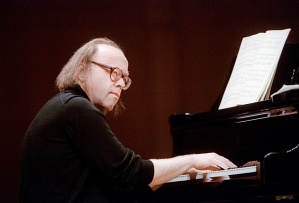
I enjoyed his playing, but I was mighty distracted by his resemblance to this guy:


It's moments like this that I realize you can't listen with your eyes. 
But the Albino Torturer (Valery Afanassiev) is a fascinating guy. On top of being a concert pianist, which would probably eat up most of my time, he's an exile, a poet, a playwright, and a novelist.  He's also known for his unconventional tempos and interpretations of canonical music. I loved what one critic wrote about his take on Schubert's last three piano sonatas: "the perversity encountered here so angered me that I felt I could not dignify what I found here with any kind of coherent analysis".

What else did that critic expect in...THE PIT OF DESPAIR!!!???

I pray a critic writes something like that about my acting some day. 

To enable listening without picturing the late great Mel Smith, I found the remaining 7 bagatelles played by Alfred Brendel. I don't have much to say about these, but number 10 was 13 seconds long, which must be some kind of bagatelle record. 

Also, as I listened carefully I realized, Brendel was humming! You too, Alfred?? Does anyone NOT hum??? 

Another day, another hummer. 

Did I mention I'm not a musicologist?


The Bagatelles I've Known


A bagatelle

A bagatelle


A bagatelle


A bagatelle is tiny billiard game, a layered dessert and a French water park. 

A bagatelle is a line of leather jackets. For example, the "red scuba jacket":


Bagatelle is a restaurant in the Meat Packing district of NYC. Here's what Mike F said about it on Yelp: "The food was solid. The environment was decent. Then the DJ hit the floor and the place went nuts."

Then there's Bagatelle, Los Angeles. Sammy C of Trip Advisor fame had a great time, but "my date's food came out over cooked. Then after we sent it back, it came back under cooked. I let her finish my meal. The poulet fermier. It was ok. I wish it was brined a little longer." 

I feel ya, Sammy.

Bagatelle is also an Irish rockband, unfortunate enough to have started recording around the same time as U2 and unfortunate enough to have named their band Bagatelle. Here's their biggest hit, "Summer in Dublin" (with lyrics). I like the way they awkwardly squeeze a lot of words into tiny musical phrases. 


But the bagatelle we're talking about is:
a short piece of music, typically for the piano, and usually of a light, mellow character. The name bagatelle literally means "a short unpretentious instrumental composition" (wikipedia).

Beethoven wrote three sets of these little pieces. Today I listened to two of the sets, the first and the last, Op. 33 and Op. 126. I would've listened to the middle set, Op. 119, but a guy can only consume so many bagatelles in a day. 

The first set thoroughly lived up to the wikipedia definition: light, mellow, short. There was nothing in them that immediately made me think, "Beethoven". As several of my top-secret on-line sources pointed out, Beethoven composed these pieces in his early Classical period, which might be why if played alongside Mozart or Haydn, I'd have a hard time saying, "Beethoven". 

Then I listened to Op. 126. These were Beethoven's last works for the piano. Analysts believe he wrote them to be played in a row because of a margin note he included for publishing, "ciclus von Kleinigkeiten" - cycle of little songs. "Cycle" suggesting they were a tapestry. Beethoven wrote to his publisher, Schott, that the bagatelles "are probably the best I've written."

Op. 33 was near the beginning of his creative life, these were near the end, two years before he died. They are jaw-droppingly contemporary sounding: haunting, spare, even jazzy. 

Here is the fourth in the set to give you a sense of what I mean: 


That's Alfred Brendel playing. I picked it mainly because of the droll Woody Allen-ish screen shot. The recording I listened to was Glenn Gould. I liked it better - even with the humming - because, oddly, I found it lacked warmth which emphasized the strange idiosyncracy of this music.